
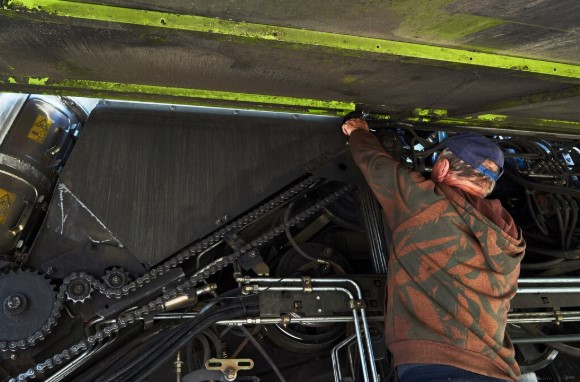
In mining operations, the most stubborn challenge is the dust. You can try modern extraction methods and advanced machinery, but fine dust particles can still find their way, scatter through the air, and settle on equipment in work areas. Effective dust control in mining not only protects workers but also preserves mineral resources, reduces waste, and extends equipment lifespan.
This article discusses skirting systems, support effective dust control, mining industry practices, and why they’ve become essential across many sites in Australia and beyond.
A Closer View: What Conveyor Skirting Systems Really Do
A conveyor skirting system is a set of barriers fitted along the conveyor belt’s loading zone. Their purpose is straightforward: keep material contained and reduce the chance of dust escaping into the air.
Most setups include four key elements: the skirts themselves, sealing strips, fastening hardware, and structural brackets. While these parts seem routine, their proper alignment is what allows the system to create a controlled, stable flow of material.
Not every mine uses the same skirting because material types vary. The most common types are rubber skirting, polyurethane skirting, and metal skirting. Some sites blend materials when abrasive loads require added durability, such as ceramic lining or reinforced surfaces.
Dust Generation in Mining: Where the Challenge Begins
Dust appears everywhere during blasting, crushing, transport, and even during simple stockpile movement. Material drops from height, friction increases, and airflow shifts unpredictably. All of this produces fine particles that are easily inhaled.
For workers, the consequences can be serious. Inhaling dust repeatedly may trigger respiratory discomfort or long-term lung issues. Visibility also drops quickly when dust hangs over a work zone, which creates operational risks.
Mining machinery, including heavy conveyors and other mining equipment in Australia, tends to wear down faster when dust settles inside bearings and moving parts. Maintenance teams find abrasive residue lodged where it shouldn’t be. Dust can even cause corrosion, making added corrosion protection measures necessary.
How Skirting Systems Help Control Dust
Conveyor skirting serves several practical purposes. First, it creates a close seal between the conveyor belt and the skirting panels. This seal limits the escape of fine particles during loading and transfer.
Second, it reduces spillage. Material that spills off the sides tends to break down as vehicles drive over it or as it gets swept around, adding more dust to the air.
Third, good skirting reduces turbulence. When there is less space for air to rush through, it creates less lift, which leads to less airborne dust. It is essential in situations when handling fine or abrasive materials that scatter quickly.
Comparing Different Skirting Solutions
Fixed Skirting Options
Fixed systems are stable, relatively low-maintenance, and well-suited for consistent material types. Their main limitation is that they can be harder to adjust after installation.
Adjustable Skirting Options
Get flexibility with the adjustable systems. It becomes easier for team members to match belt wear and adjust it to account for variations in load depth. This adaptability improves performance for mines with changing material conditions.
High-Efficiency Dynamic Systems
The best use of dynamic skirting solutions is in applications with heavy loading, fast belt speeds, and irregular material flow. Mines with higher production targets chose these to ease their work.
Material-Specific Choices
Rubber, polyurethane, and metal each have their roles. Rubber handles general use well. Polyurethane tends to last longer in abrasive environments. Metal can work in extreme cases, when enhanced with a ceramic lining for added resistance.
Choosing the Best Skirting for Your Operation
A practical selection process starts with understanding belt speed, the nature of the material, and the site’s load capacity. Some materials behave unpredictably, so testing might be needed.
Environmental conditions, like temperature swings, humidity levels, and abrasion intensity, should also guide the decision. A system that works well in dry conditions may not perform as well in high humidity.
Budget matters too. Mines focus on long-term return on investment rather than the initial cost alone. If a slightly higher-priced system prevents premature wear, downtime drops. So does the maintenance spending.
Safety Improvements Gained Through Skirting
Less spillage means fewer slip-and-trip hazards around conveyors. Workers experience fewer dust-related issues, and overall visibility improves. With tighter dust control, sites also find it easier to meet safety requirements specific to the mining industry.
Environmental Considerations
Good skirting reduces dust emissions, supporting cleaner air quality around the site’s perimeter. It also reduces material loss, allowing mining teams to deliver more consistent output while contributing to more sustainable mining practices.
Conclusion
Conveyor skirting systems may not be the flashiest part of mining operations, but they are the most effective tools for improving dust control in mining. By keeping material sealed, limiting spillage, protecting equipment, and supporting compliance, they help the dust control mining industry manage productivity and environmental responsibilities. As mines evolve and handle increasingly complex material streams, well-chosen skirting systems will continue to play an essential role.
If your operation needs reliable, durable, and efficient conveyor skirting solutions, Australian Mining Product and Services can help you select systems that improve dust control and protect your equipment. Our team understands the daily challenges of mining and offers products designed for long-term performance. Call 1300 241 620 for tailored guidance or to discuss your requirements.