 Skip to content
Ask any maintenance planner or in our case mechanical maintenance superintendent, what wrecked their last shutdown and you’ll rarely hear “logistics.”
You’ll hear about a seal that arrived cracked, a pump housing that turned up gouged, a pallet of filters that got wet somewhere between Perth and site.
Those are logistics failures, wearing different costumes.
Across the Pilbara, the Bowen Basin, the Goldfields and everywhere in between, Australian mining runs on freight routes measured in thousands of kilometers — and the value that leaks out of those routes almost never appears on a single line of a profit and loss report
What This Comes Down To
● Damage on long haulage routes is usually treated as bad luck rather than a measurable, fixable pattern.
● Freight economics and supplier-direct economics are different calculations, and mixing them up quietly inflates landed cost.
● Deliveries that ignore shift rosters and shutdown windows create double handling, congestion, and idle crews.
● Consistent load securing across carriers is one of the cheapest wins available to any site.
● Logistics deserves the same scrutiny as maintenance planning, because it protects the same two things: uptime and margin.
Where the Value Actually Disappears
Start with the obvious: corrugated road, thousands of kilometers of vibration, temperature swings from a Queensland summer to a cold Goldfields night.
Equipment that left the supplier in perfect condition arrives with fretted surfaces and loosened fittings. Consumables fare worse — hoses take on grit, lubricants sit too long in the sun, packaging fails and contamination follows.
Then there’s timing. Spares orders that lands on a Sunday when the warehouse crew is off doesn’t get inspected, doesn’t get put away, and doesn’t get found when the fitters need it on Tuesday. Multiply that by a few hundred deliveries and you have a store full of stock nobody trusts.
The third leak is the widest. Central procurement optimises for unit price and payment terms. Site logistics optimises for having the right thing in the right place. When those two functions don’t talk, you get cheap parts arriving at expensive moments — and nobody owns the gap.
The Restraint Habit Nobody Brags About
Among the operators who consistently avoid in-transit losses, one shared practice stands out: they take securing freight seriously as an engineering decision rather than a loading-dock afterthought. Straps, chains, dunnage, edge protection and corner boards do genuinely unglamorous work, holding equipment, spares and consumables still across hundreds of kilometers of rough surface.
A well-specified load restraint system is readily sourced from specialty industrial packaging suppliers, which puts it within easy reach of any coordinator or site manager working to a budget. The economics are hard to argue with — modest spend against the replacement cost of a single damaged assembly. And it applies to every leg of the journey, whether stock is moving supplier to warehouse, warehouse to warehouse, or straight to the pad ahead of a planned shutdown.
Reading Your Own Damage Data
Most sites already have the information they need to fix this; it’s just scattered across receipting notes, photos and someone’s memory. Pulling it together turns anecdote into evidence.
Here’s what a structured review of the past twelve months typically surfaces:
What to Examine The Question It Answers Likely Discovery
Damage claims sorted by route Which lanes are actually hurting you Two or three lanes carry most of the loss
Damage claims sorted by carrier Whether the problem is the road or the operator Carriers on identical lanes perform differently
Delivery timestamps vs. roster Whether freight arrives when people do A surprising share lands unattended
Freight cost vs. supplier delivered price Where consolidation genuinely pays Some “free delivery” is priced into the part
Emergency freight spend How much planning failure costs in cash Charter and hotshot runs dwarf expectations
Building Something Better, Step by Step
Improvement here doesn’t require a systems overhaul — it requires sequence.
Start With Twelve Months of History
Gather receipting records and damage reports. Sort by lane and by carrier before drawing any conclusions.
Set One Securing Standard
Write it down. Issue it to every carrier you use, and make compliance a condition of engagement rather than a request.
Map Deliveries Against the Maintenance Calendar
Work backwards from shutdown dates and roster changeovers. Book inbound freight to land when crews are present to receive it.
Compare Landed Cost Honestly
For your top twenty consumables, calculate consolidated freight against supplier-direct delivery. The answer varies by item.
Give the Function an Owner
Someone must be accountable for the space between procurement’s contract and the warehouse’s shelf.
Review Quarterly
Track damage rate by lane. If the number isn’t moving, the standard isn’t being applied.
Choosing Suppliers Who Understand Site Realities
Better logistics only pays off when the products moving through it are built to last on site.
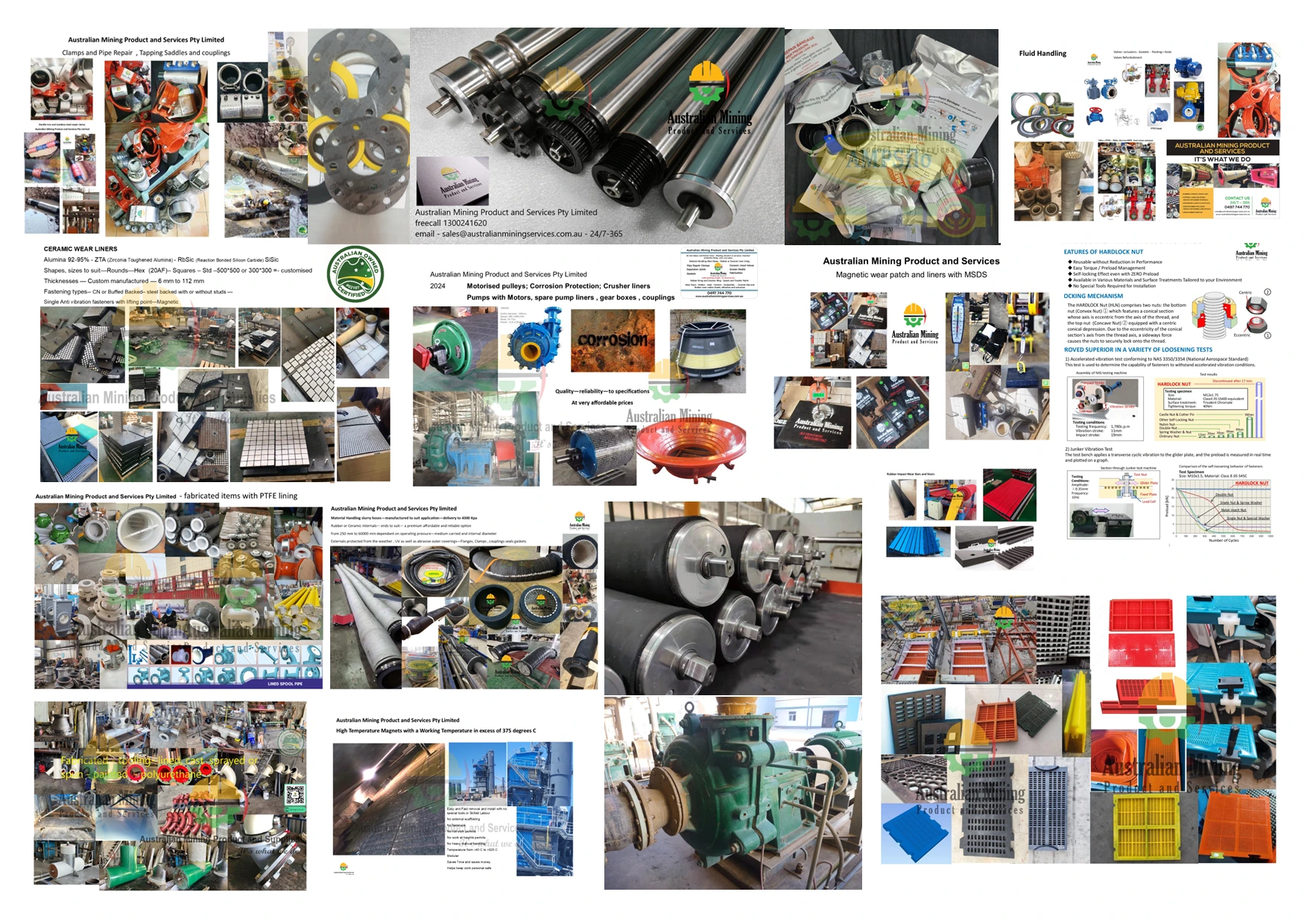
Australian Mining Products and Services manufactures and supplies professional mining equipment globally but predominantly to Australian end users and distributors, covering wear linings, fluid handling gear, screening media, grinding mill liners, conveyor belt accessories, pipe repair bandages and a range of specialised site services. Our supply, supports major operators including BHP, Rio Tinto, Newmont, Glencore, South32 and Anglo American, with coverage across Queensland, WA, NSW, SA, Tasmania, the Northern Territory, the ACT and Victoria.
That national footprint matters when your freight legs cross state lines.
Operators looking to strengthen their maintenance and material handling workflows can reach the team on 1300 241 620 and work with people focused on measurable reductions in downtime and genuine gains in reliability.
Questions Operators Ask Before Changing How They Move Freight
Before committing to a different approach, most teams want the practical objections answered first.
Is a logistics review worth it on a site with only moderate freight volume?
Usually yes, because the cost isn’t in the freight spend — it’s in the downtime a single missing or damaged part causes. Even modest sites lose real production hours to parts that arrived unusable. The review itself costs little more than someone’s time and access to existing records.
How do we get carriers to follow our securing standard?
Make it contractual rather than advisory, and keep the standard short enough that drivers can actually apply it. Carriers generally comply when the requirement is clear, consistent, and tied to continued work. Ambiguity is what breeds inconsistency, not unwillingness.
Should we consolidate freight or let suppliers deliver direct?
It depends entirely on the item, which is why blanket policies underperform. High-volume consumables usually favour consolidation, while urgent or fragile single items often move better direct. Run the numbers per line rather than per contract.
Who should own site logistics if procurement is centralised?
Someone on site needs authority over inbound scheduling and receipting standards, even when contracts sit elsewhere. The role bridges two functions that otherwise optimise against each other. Without it, the gap stays invisible until a shutdown slips.
What’s the fastest way to reduce in-transit damage?
Standardise how loads are secured and make sure protective materials are actually available at the point of dispatch. It’s the shortest path from decision to measurable result. Most sites see the damage rate on their worst lanes drop within a couple of quarters.
How long before improvements show up in the numbers?
Damage reduction shows quickly once securing practices change, often within one quarter. Scheduling and coordination gains take longer because they depend on the maintenance calendar cycling through. Expect a clearer picture at the twelve-month mark.
Material movement is the least glamorous part of a mining operation and one of the most consequential. Every hour of production depends on something having arrived intact, on time, and findable. Treating that chain as a strategic function — with standards, data and an owner — costs far less than the failures it prevents.
The sites that work this out stop paying for the same lesson twice.
