 Skip to content

SS 316 Seamless Pipe, ASTM A312 TP316 Welded Pipe Supplier, Stainless Steel 316 Pipe/ Tube, SS 316 Seamless Pipe, Marine-grade 316 Stainless Steel Tubing, SA 312 TP 316 Schedule 40 Pipe.
The SS 316 Seamless Pipe has become an indispensable material for the industrial sector.
This alloy of iron and chrome is recognized for its high resistance to corrosion, as well as its durability. 316 stainless steel tubing can be produced in both seamless and welded tubes to meet specific customer needs.
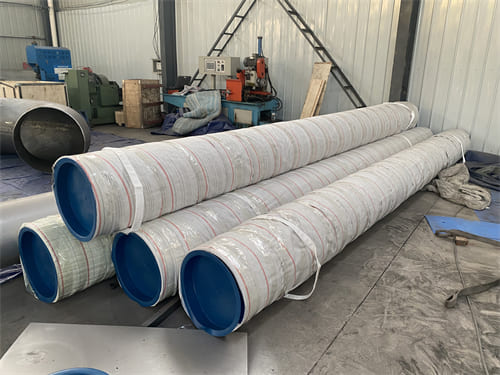
The 316 seamless tube offers greater mechanical resistance than other types of tubing since there are no weak joints between its parts.
On the other hand, the 316 welded tube provides a stable and reliable connection thanks to proper metal processing. Also, the ASTM A312 TP316 Welded Pipe has different characteristics such as a high carbon index, low sulfur content and low amount of free oxygen compared to other similar types.
Due to all of these properties, SS 316 Seamless Pipe is ideal where tolerance to extreme heat is required as well as superior chemical resistance and imperviousness to salt water or harmful chemicals; being widely used in industries related to petroleum, natural gas, nuclear medicine and naval engineering, among many other advanced technological applications.
- 304
- 304L
- 304H
- 310
- 310S
- 316
- 316L
- 316H
- 316Ti
- 17-4PH
- 317
- 317L
- 321
- 321H
- 253MA
- 347
- 347H
- 904L
- AL6XN
- 254SMO (UNS S31254)
Other steels available
- Hastelloy G30
- Hastelloy C276
- What is Hastelloy C-276?
- Hastelloy C-276 (UNS N10276) was developed in the 1960s as an improvement over alloy C, which suffered severe weld heat-affected-zone (HAZ) corrosion.
- The key innovation: ultra-low carbon (0.01% max) and silicon (0.08% max) to suppress carbide precipitation during welding. This eliminated post-weld solution annealing for most applications — a breakthrough that made C-276 the most widely specified nickel alloy for chemical process equipment. Today it remains the default choice for reactors, heat exchangers, piping, and valves handling mixed acid streams where both oxidizing and reducing conditions may occur.
- The balanced Cr (14.5–16.5%), Mo (15–17%), and W (3–4.5%) chemistry provides broad-spectrum resistance: Cr for oxidizing acids via the Crook₃ passive film,
- Mo+w for reducing acids and pitting resistance. Tungsten contributes to pitting resistance at approximately 50% of Mo’s effectiveness per the PREN formula. C-276 is immune to chloride stress-corrosion cracking — the failure mode that limits austenitic stainless steels in chloride-bearing service. It maintains ductility from cryogenic temperatures (−196°C) to elevated temperatures, with useful mechanical properties to approximately 1100°C.
- Inconel 600
- Incoloy 800
- Alloy 20
- Hastelloy X
- Hastelloy C22
- The All-Rounder Superalloy — Balanced Oxidizing & Reducing Resistance Across Wet Chlorine, Nitric Acid & Mixed Acids | ASTM B575 | Special AlloysC-22: The Versatile All-Rounder of the C-Family
- Hastelloy C-22 is the most widely specified corrosion-resistant nickel alloy for service where both oxidizing and reducing species are present. Introduced by Haynes International in 1985, C-22 was engineered as a metallurgically more stable successor to C-276 and a more chloride-resistant alternative to C-4. By carefully balancing chromium (oxidizing protection), molybdenum (reducing protection), and tungsten (synergistic reducing/crevice protection), C-22 achieves genuine versatility — the ability to handle alternating oxidizing and reducing process streams in a single material.
- The 20–22.5% chromium — substantially higher than C-276 (14.5–16.5%) and C-4 — is the key to C-22’s signature performance. Higher Cr delivers superior resistance to oxidizing acids (nitric acid, wet chlorine, ferric and cupric salts) and, critically, the highest critical crevice corrosion temperature (CCT) of any C-family alloy. The molybdenum-plus-tungsten combination provides reducing-acid and chloride protection, while the ultra-low carbon (0.015% max) and silicon (0.08% max) prevent harmful grain-boundary precipitates in the weld heat-affected zone.
- For flue gas desulfurization (FGD) systems, pharmaceutical API reactors, fine chemical plants, and any facility handling complex or variable chemistries, C-22 is the proven, cost-effective specification. It is the material of choice whenever oxidizing contaminants (dissolved oxygen, Fe³⁺, Cu²⁺, wet Cl&sub2;) are present alongside halides — environments where C-276 and C-4 fall short and where C-2000 would be over-specified and over-priced.
- Inconel 601
- Incoloy 800H
- Alloy 31
- Hastelloy B2
- Hastelloy C2000
- Inconel 625
- Incoloy 800HT
- Monel 400
- Hastelloy B3
- Hastelloy C4
- Inconel 718
- Incoloy 825
- Monel K500
- DUPLEX 2205
- Duplex S31803
- SUPER DUPLEX 2507
UNS S32750
Forms of Super Duplex 2507 Available
- Sheet
- Plate
- Bar
- Pipe & Tube (welded & seamless)
- Fittings (i.e. flanges, slip-ons, blinds, weld-necks, lap joints, long welding necks, socket welds, elbows, tees, stub-ends, returns, caps, crosses, reducers, and pipe nipples)
Duplex 2507 Overview
Duplex 2507 is a super duplex stainless steel designed for applications which demand exceptional strength and corrosion resistance. Alloy 2507 has 25% chromium, 4% molybdenum, and 7% nickel. This high molybdenum, chromium and nitrogen content results in excellent resistance to chloride pitting and crevice corrosion attack and the duplex structure provides 2507 with exceptional resistance to chloride stress corrosion cracking.
Usage of Duplex 2507 should be limited to applications below 600° F (316° C). Extended elevated temperature exposure can reduce both the toughness and corrosion resistance of alloy 2507.
Duplex 2507 possesses excellent mechanical properties. Often a light gauge of 2507 material can be used to achieve the same design strength of a thicker nickel alloy. The resulting savings in weight can dramatically reduce the overall cost of fabrication.
Corrosion Resistance
2507 Duplex is highly resistant to uniform corrosion by organic acids such as formic and acetic acid.
It is also highly resistant to inorganic acids, especially if they contain chlorides. Alloy 2507 is highly resistant to carbide-related intergranular corrosion. Due to the ferritic portion of the duplex structure of the alloy it is very resistant to stress corrosion cracking in warm chloride-containing environments. Through additions of chromium, molybdenum and nitrogen localized corrosion such as pitting and crevice attack are improved. Alloy 2507 has excellent localized pitting resistance.
What are the characteristics of Duplex 2507?
- High resistance to chloride stress corrosion cracking
- High Strength
- Superior resistance to chloride pitting and crevice corrosion
- Good general corrosion resistance
- Suggested for applications up to 600
- Low rate of thermal expansion
- Combination of properties given by austenitic and ferritic structure
- Good weldability and workability
- Super Duplex S32760
- ZERON® 100, SUPER DUPLEX STAINLESS STEEL
Carbon Steel
- ASTM A234 WPB
- CARBON STEEL PRODUCTS
Titanium
- 10V-2Fe-3Al
- 6Al-4V
- 6Al-4V STA
- 6Al-4V ELI
- 6Al-2Sn-4Zr-2Mo
Cobalt
- WASPALOY®
- TRIBALOY®T-800®
- René 41
- L605
- C263
- 694 (CM-64)
- 188
Comparison
- 304 vs 304L vs 316 vs 316L
- 304 vs 316 Stainless Steel
- 304 vs 316 vs 316L vs 316Ti
- 304 vs 321 Stainless Steel
- 310S vs 304 vs 316
- 316 vs 317L Stainless Steel
- 321 vs 347 Stainless Steel
- 904L vs 316L
- Super Duplex 2507 vs 6Mo 254SMO
- A333 Gr.6 vs A420 WPL6
- Carbon Steel vs Stainless Steel
When Should You Use Carbon Steel vs Stainless Steel?
Carbon steel is the right call when your piping system handles non-corrosive fluids at moderate temperatures (water, steam, oil, gas) and initial project cost is a major constraint. You’ll pay roughly one-third to one-fifth of what the same stainless steel fittings cost. Stainless steel becomes the correct answer the moment corrosion enters the picture — chlorides, acids, sanitary requirements, or any environment where rust would compromise safety or product quality. At HT PIPE, roughly 55% of our flange exports are carbon steel (mostly A105), but the stainless share has been climbing every year as more projects in the Middle East and Southeast Asia move toward corrosion-resistant specs from day one.
- Inconel 625 vs Incoloy 825
- Lean vs Standard vs Super Duplex
- Inconel 718 vs 625
- Monel vs Inconel vs Hastelloy
- A335 P11 vs P22 vs P91
- S31803 vs S32205
Material Selection
If your chloride level is below 200 ppm and temperature stays under 60°C, 304 stainless handles it at the lowest cost. Between 200 ppm and 1000 ppm chlorides, step up to 316L. When chlorides cross 1000 ppm or temperatures exceed 60°C — duplex 2205 and super duplex 2507 enter the conversation, delivering PREN values of 34 and 40+. If you’re dealing with H₂S (sour service), HCl, or temperatures above 500°C, nickel alloys — Inconel 625 or Hastelloy C276 — are your only option. At HT PIPE, we follow one rule: match the material to the worst-case operating condition, not the normal one.
The normal condition is where you operate 95% of the time; the worst-case condition is where your fitting fails if you chose wrong
- Alloy 20 vs 316 Stainless Steel
- Inconel 625 vs Hastelloy C276
- Monel 400 vs Inconel 625
- Titanium Grade 2 vs Grade 5
- Duplex 2205 vs Super Duplex 2507
- Hastelloy C22 vs C276
C22 or C276?
The difference between Hastelloy C22 and C276 comes down to chromium vs molybdenum.
C22 loads up on chromium — 20-22.5% vs C276’s 14.5-16.5% — which gives it superior resistance to oxidizing acids (HNO₃, chromic acid, ferric chloride). C276 loads up on molybdenum — 15-17% vs C22’s 12.5-14.5% — which makes it the better choice for reducing acids (HCl, H₂SO₄).
C276 has roughly PREN 68; C22 has PREN 65. Cost is close:
C22 usually runs 5-10% higher than C276. At HT PIPE, we stock C276 as our default Hastelloy because HCl service is 3× more common in inquiries than oxidizing acid service. C22 is the specialist we order when a pharmaceutical or specialty chemical client comes in with a nitric-plus-hydrochloric alternating cleaning cycle where C276’s lower Cr would fail the oxidizing half of the cycle.
- Inconel 600 vs Inconel 625
- Monel 400 vs K500
